
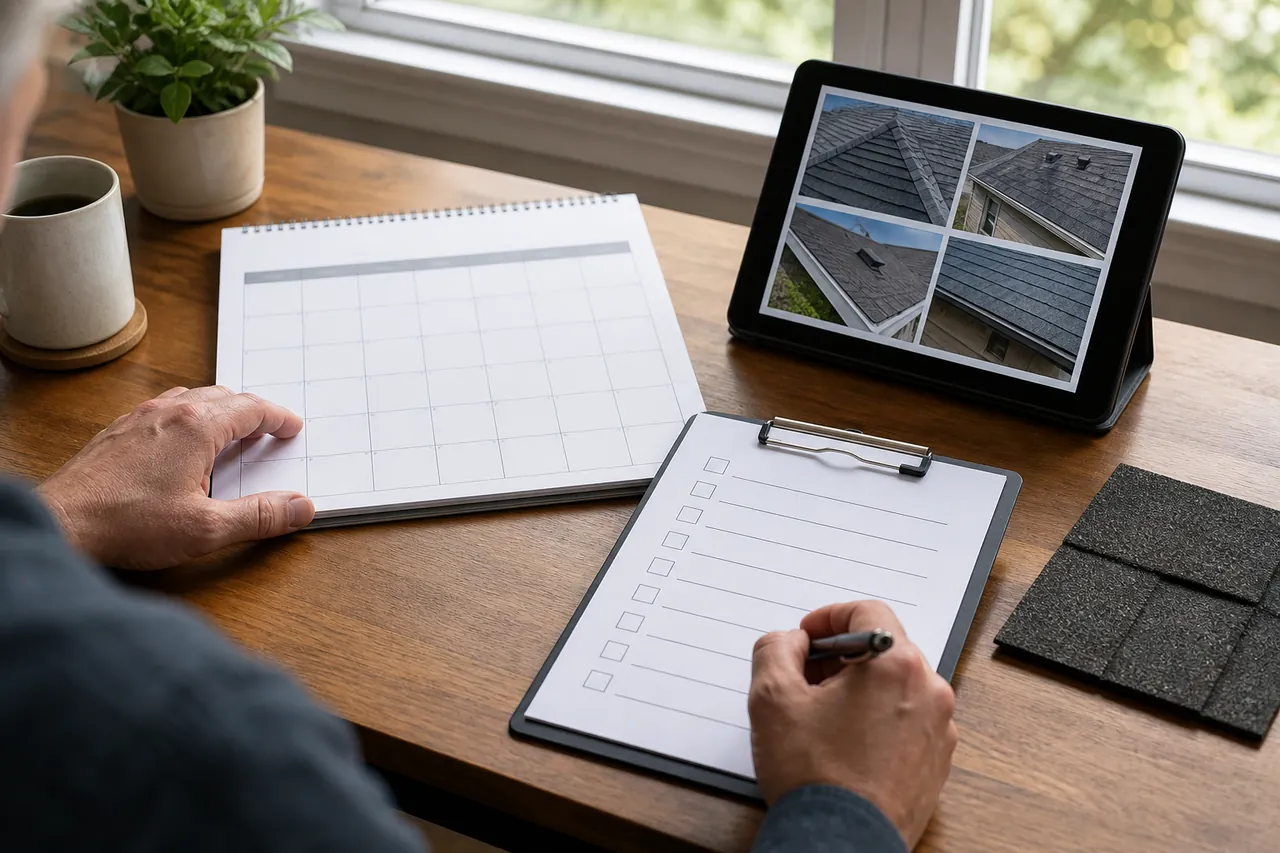
Roof maintenance records help homeowners distinguish routine observations from meaningful changes and give a contractor a history that may not be visible during one visit. The record should be practical: dates, roof areas, safe photographs, completed work, and outstanding questions. It should never depend on homeowner roof access or imply that paperwork replaces professional evaluation.
Create a Consistent Roof-Area Index
Name each section by building and orientation, such as front main slope, rear addition, porch roof, garage, chimney area, or skylight. Add a simple ground-level elevation photo or sketch. Use the same names on every inspection note, service invoice, and project photograph so records from different years can be compared.
List gutters, downspouts, visible penetrations, and adjoining walls under the relevant roof area. Mark locations that cannot be seen from safe ground. An honest “not observed” is better than an unlabeled photo taken from an unsafe position.
Log Weather-Linked Observations
Record severe weather dates, visible debris, gutter overflow, interior moisture, fallen branches, or a noticeable surface change. Include the time and general conditions without relying on memory months later. Photograph from secure ground or ordinary windows and label direction and viewpoint.
Do not climb, lift materials, clear roof debris, or enter a hazardous attic to complete the checklist. Seek appropriate help for active water, falling components, electrical exposure, or structural concern. Maintenance documentation begins only after people are safe.
File Professional Findings and Work
Keep inspection reports, accepted scopes, product documents supplied for the project, approved changes, completion notes, and labeled photographs together. Record which roof sections were inspected and which remained inaccessible. When work is performed, identify the exact area and description rather than writing only “roof repaired.”
Track related gutter, chimney, siding, skylight, solar, or ventilation work by responsible provider. These components may interact with the roof, but their records should not be blended into a roofing scope that did not include them.
Review the Record Periodically
Add a section for ordinary site conditions that influence future access: overhanging vegetation, gates, steep ground, roof-mounted equipment, shared property lines, and areas where occupants need advance notice. Record professional gutter or drainage service separately from roof-surface work. If a contractor recommends a future observation or visit, capture the reason and relevant roof area instead of reducing it to a generic calendar date.
After a service visit or meaningful weather event, update the index and compare photographs from the same viewpoint. Retire outdated records without deleting the history. Note open questions and the next responsible party so they do not disappear among completed documents.
When records mention a recommended interval, preserve the source and the condition it addresses. Product guidance, a contractor’s site-specific recommendation, and a household reminder are different kinds of information. Labeling them accurately prevents a personal calendar note from being mistaken for a professional finding.
Keep a secure digital backup and make the summary available to household decision-makers. A roof maintenance checklist is effective when someone unfamiliar with the property can identify the area, sequence, and prior work. That clarity helps a roofing contractor focus the next evaluation without relying on generic schedules or unsupported assumptions about hidden conditions.