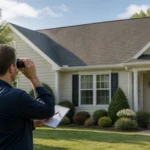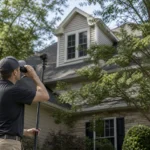
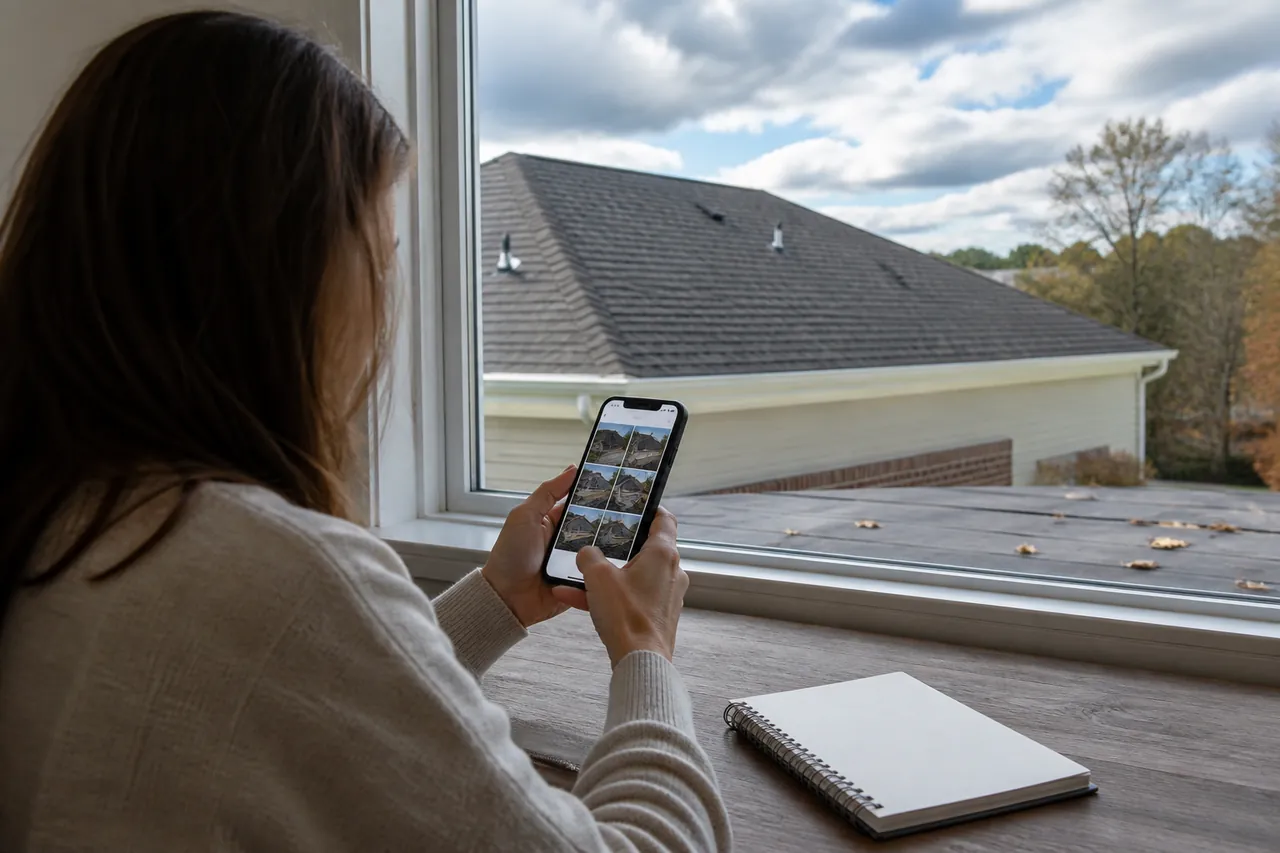
Severe weather can leave obvious debris on the property or produce subtle changes that are not noticed until later. Recording conditions soon after the event can help a roofing contractor understand the timeline, but only after the area is safe. The goal is not to perform a storm inspection yourself. It is to preserve visible facts from secure locations and identify where professional evaluation may be needed.
Start With the Event Timeline
Write down the date, approximate time, and type of weather reported at the property: high wind, hail, heavy rain, snow, ice, or falling branches. Note how long the event lasted in general terms and whether power, drainage, or access changed. Save relevant building or neighborhood notices without treating them as proof of roof damage.
Record when you first observed an interior drip, stain, fallen material, or exterior change. If a condition appeared hours later, keep that distinction. A precise sequence helps separate what was present before the event from what was noticed afterward, even when the connection still needs to be evaluated.
Photograph From Stable Ground
Take wide images of every safely visible building side, roof slope, gutter line, downspout discharge area, and surrounding ground. Then capture closer views with camera zoom. Include fallen branches, displaced debris, or material found on the ground, but do not stand below a damaged tree or roof edge.
Never climb onto the roof, use a ladder in uncertain conditions, or move debris that may be supporting or concealing damage. Stay away from downed lines, unstable structures, flooding, and wet electrical areas. Mark any view that was unavailable because of safety or access.
Document Interior Conditions Carefully
Check occupied rooms for visible water, staining, bubbling paint, damp flooring, or a changed odor. Photograph the full wall or ceiling before taking a closer view, and label the room and date. Place a container only when it can be done safely without contacting electrical fixtures or unstable material.
Do not puncture a ceiling, pull down wet finishes, enter a damaged attic, or disturb insulation. If water is near wiring, the ceiling is sagging, or the structure appears unsafe, keep people away and contact the appropriate emergency or building professional. Protecting occupants matters more than extending the record.
Preserve Context for the Contractor
Keep earlier roof photographs, maintenance records, project documents, and notes about known preexisting conditions. Avoid cleaning or rearranging the exterior area solely for photographs. If temporary protective work is performed by a professional, record who did it, when, and which area was addressed.
Include exterior drainage observations after the weather has passed. Note standing water, erosion, blocked-looking discharge areas, or a downspout that has separated, but do not enter floodwater or open underground drains. Roof and site drainage may need to be considered together even when different providers own the work.
Organize the evidence by date and location before the roofing visit. Severe-weather records cannot determine whether a roof assembly was damaged, but they can show the starting condition, visible change, and access limits. That gives the contractor a factual basis for inspection without asking the homeowner to take unsafe steps or make a remote diagnosis.