Interior moisture notes can give a roofing contractor important context, even though the visible stain or drip may be far from the point where water entered the exterior assembly. Water can travel along framing, fasteners, insulation, or finishes before it appears. A precise room record helps connect timing and building geometry while avoiding a premature diagnosis.
Describe the Exact Interior Location
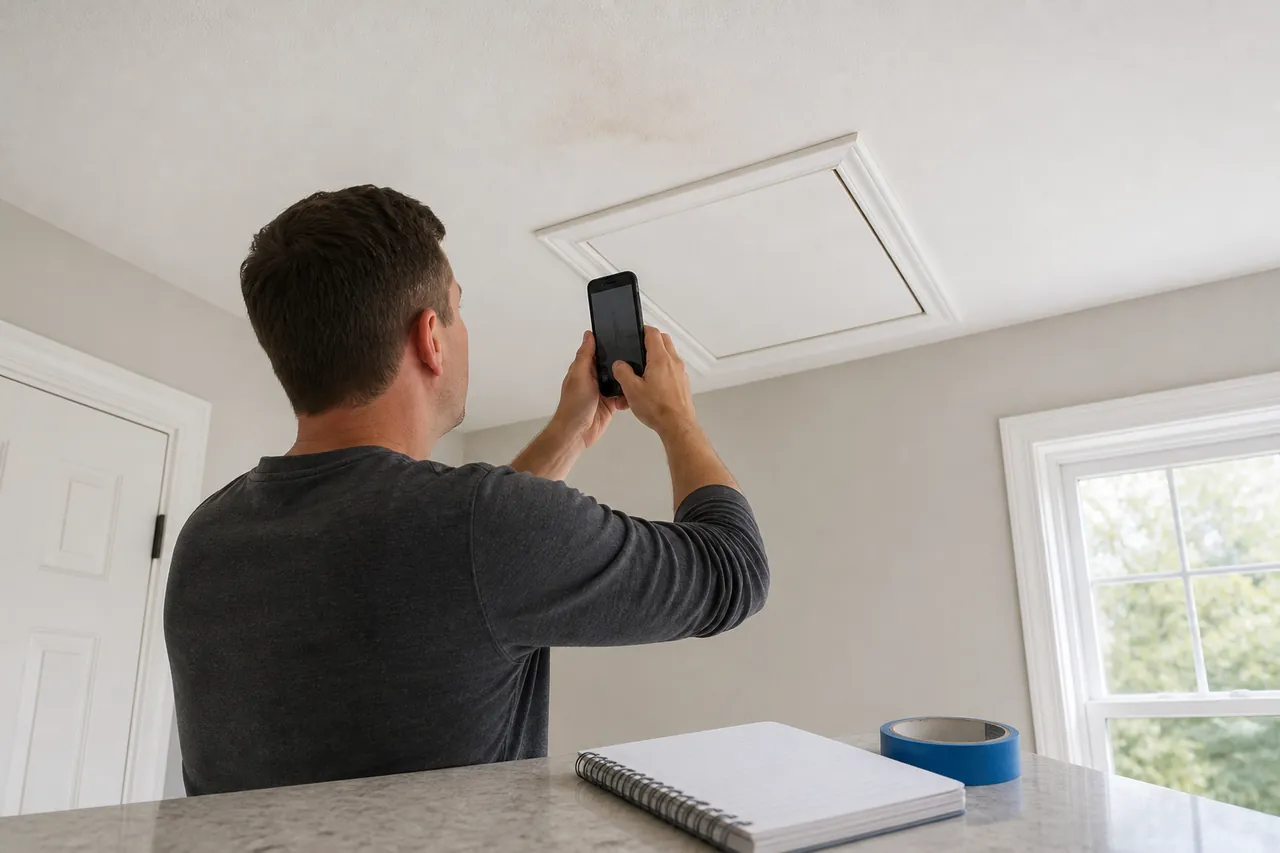
Name the room, floor, wall or ceiling plane, and nearby fixed features. Take a wide photograph showing the entire area, then a closer image of staining, bubbling paint, dampness, or dripping. Include a ruler or another simple scale only when it can be placed without touching unstable or contaminated material.
Mark the date and time. If the condition changes, take comparison photographs from the same safe viewpoint. Do not draw directly on wet finishes or push on a sagging ceiling. Keep people away when material appears unstable or water is near lighting, wiring, or electrical devices.
Link the Note to Weather and Use
Record the general weather before and during the observation: steady rain, wind-driven rain, snow melt, freeze-thaw conditions, or a dry period. Note whether the mark appeared while plumbing fixtures, HVAC equipment, or appliances were in ordinary use. These facts help keep possible building systems in view without declaring which one is responsible.
Include prior moisture events, roof work, plumbing repairs, exterior changes, and room renovations. A stain that existed earlier should be distinguished from a wet edge or new enlargement. If you cannot tell, label the timing as uncertain rather than filling the gap with an assumption.
Avoid Unsafe Investigation
Do not enter an attic with limited flooring, exposed wiring, wet insulation, pests, or uncertain structure. Do not cut into a ceiling, peel back materials, or use a household meter as proof of the source. Suspected mold or contaminated material should not be disturbed for a photograph.
If temporary protection is needed, use only actions that can be completed safely in the occupied space and seek appropriate professional help. The roofing contractor may need to coordinate with plumbing, HVAC, electrical, or building-material specialists before an exterior scope can be confirmed.
Build a Room-to-Roof Reference
A simple floor plan can show the interior location relative to exterior walls, roof slopes, valleys, penetrations, or upper levels. Treat this as orientation, not a traced leak path. Add safe ground-level roof photographs labeled by building side and keep them with the interior notes.
To track an existing stain, place removable reference marks on a nearby dry, stable surface only when doing so will not damage finishes or contact moisture. Otherwise, use repeated photographs from the same viewpoint. Record whether the boundary, color, texture, or dripping changed, while avoiding claims about moisture content that have not been professionally measured.
Bring the timeline and images to the visit. Interior moisture notes matter because they preserve a changing condition that may not be visible later. When the record identifies location, weather, household activity, and access limits, it supports careful evaluation while leaving moisture tracing and roof diagnosis to trained professionals.