
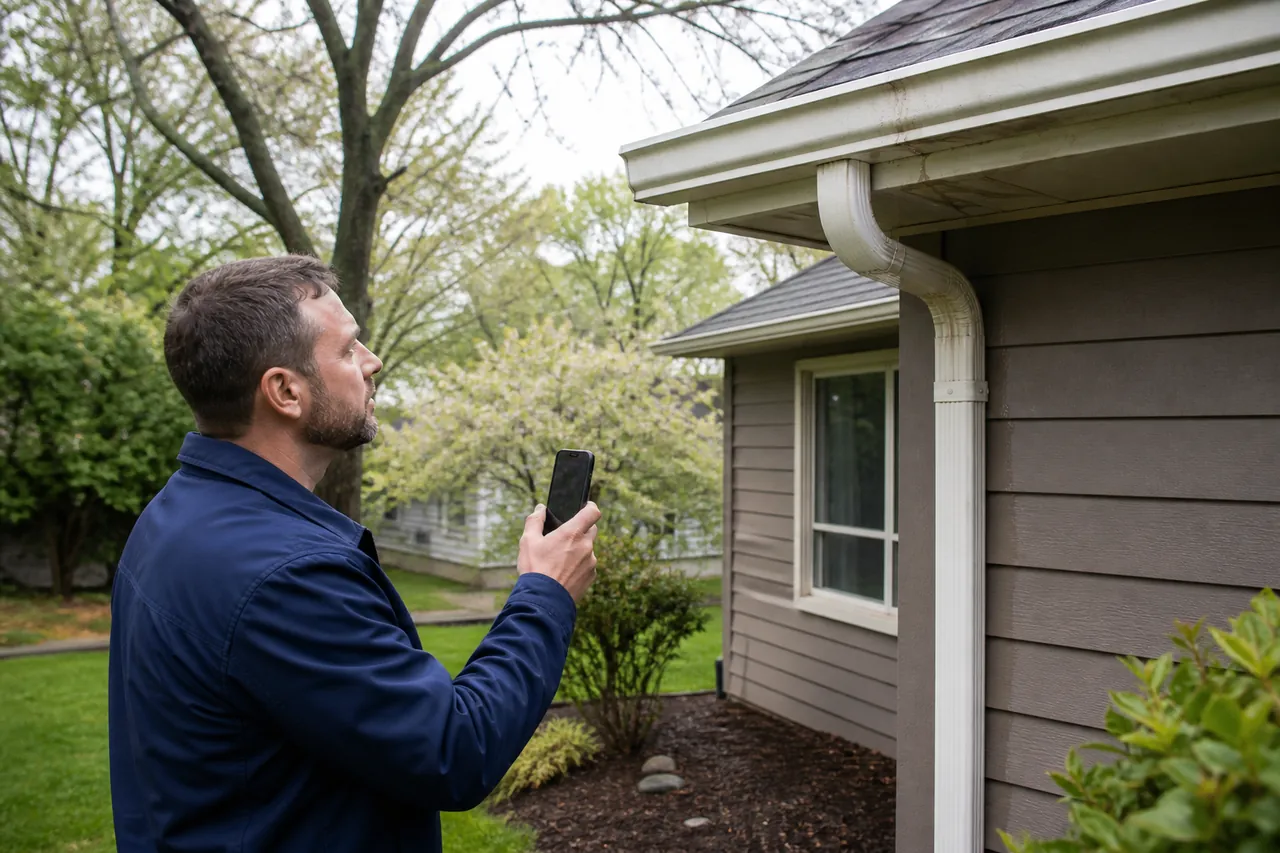
Gutter overflow is easy to notice during heavy rain, but the visible spill does not identify a single cause. Rain intensity, roof area, debris, gutter position, outlet condition, downspout routing, and drainage at the ground can all influence what happens. Careful observation helps a roofing or gutter professional understand the pattern without requiring ladder access or work during a storm.
Record Where and When It Happens
From indoors or stable ground under safe conditions, note the exact gutter section, building side, and time the overflow appears. Is water spilling over the front edge, behind the gutter, at an end, or near an outlet? Does it happen across a long run or at one short location? Use a wide video or photograph to preserve the relationship to roof valleys and downspouts.
Do not stand beneath the roof edge during heavy weather or approach areas with lightning, falling limbs, flooding, or electrical hazards. Never climb a ladder in rain. If documentation cannot be collected safely during the event, write the observations afterward and photograph the area when conditions are stable.
Compare Rain Events Without Guessing
Note whether the overflow occurs during light rain, only intense downpours, or after rain has continued for some time. Record general wind direction if it appears relevant and whether water also collects at the foundation or discharges unusually from a downspout. These details help establish repeatability.
Avoid turning the notes into a capacity calculation or declaring the outlet blocked. The professional may need to consider roof geometry, drainage design, gutter alignment, and site conditions directly. A homeowner’s comparison should show the pattern, not prescribe the modification.
Look for Safe, Visible Context
After the weather clears, observe from the ground whether leaves or debris are visibly accumulated, a gutter section appears displaced, a downspout connection is separated, or erosion is present below. Photograph the entire elevation before zooming in. Do not reach into gutters, open underground drains, or remove debris from a height.
Record recent roof, fascia, gutter, landscaping, or drainage work. Note trees over the area and known changes to surface drainage. These facts may affect the assessment, but the connection should remain open until the relevant components are inspected.
Prepare Questions for Evaluation
Ask whether the visit will consider the roof drainage area, gutter slope and attachment, outlets, downspouts, discharge location, and adjacent roof details. Clarify which parts can be assessed from accessible locations and whether underground or concealed drainage belongs to another provider.
Follow the water to its visible discharge point from a safe route. Record whether a downspout empties onto a splash block, extension, surface drain, or another known feature, and whether water returns toward the building. Do not disconnect parts or test underground drainage. This ground-level context may help separate roof-edge overflow from a discharge problem.
Keep event notes with before-and-after photographs and the contractor’s findings. Gutter overflow can be a useful signal because its location and timing reveal how water is moving during real weather. A safe, labeled record gives the professional meaningful evidence while keeping cleaning, adjustment, and high access out of the homeowner’s hands.